

A roof inspection tells you what condition your roof is in while any problems are still small. Below you'll see what a good inspection checks, how the process works, and when to book one in North Texas.
What a Roof Inspection Covers
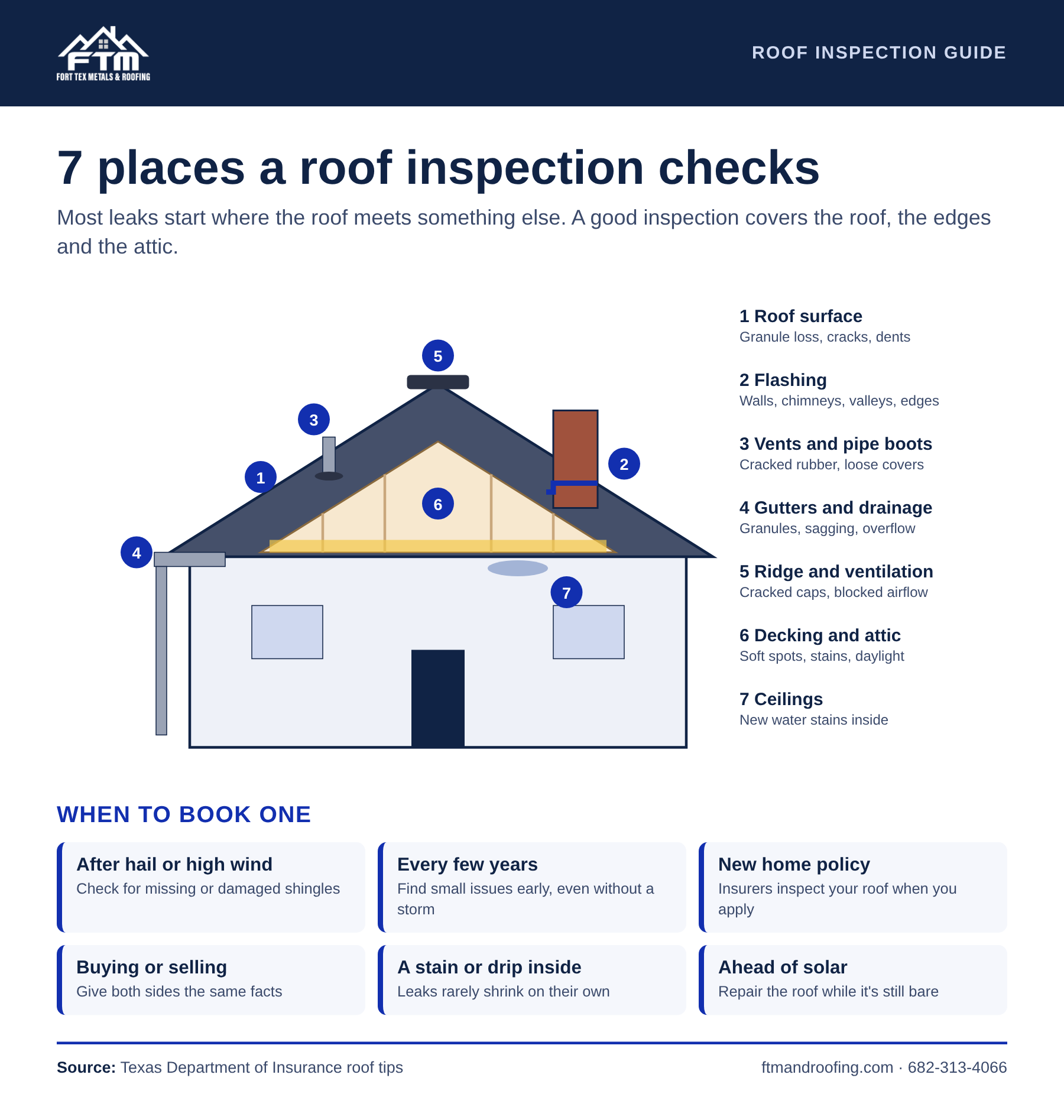
A good inspection looks at more than just the shingles. Most leaks start where the roof surface meets something else, such as a vent, a wall, a chimney or a valley. Here are the areas a thorough inspection includes:
| Area | What gets checked | Signs of trouble |
|---|---|---|
| Roof surface | Shingles, metal panels or tile | Missing granules, cracks, lifted tabs, dents |
| Flashing | Metal at walls, chimneys, valleys and roof edges | Gaps, rust, loose or bent pieces |
| Vents and pipe boots | Rubber collars and vent covers | Cracked boots, dents, missing fasteners |
| Gutters and drainage | Gutters, downspouts and the edge of the roof | Granules in the gutters, sagging, water spilling over |
| Ridge and ventilation | Ridge caps and attic vents | Cracked caps, blocked airflow |
| Decking | The boards under the roof surface | Soft spots or sagging when walked |
| Attic and ceilings | Underside of the decking, insulation, ceilings | Water stains, damp insulation, daylight through the boards |
The roof edge matters during a reroof too. The City of Fort Worth roofing FAQ says drip edges and crickets are required when a home is re-roofed, even if the existing roof doesn't have them. A cricket is a small peaked section that sends water around a chimney or other obstacle. An inspection can show you if your roof is missing either one.
The Inspection Process, Step by Step
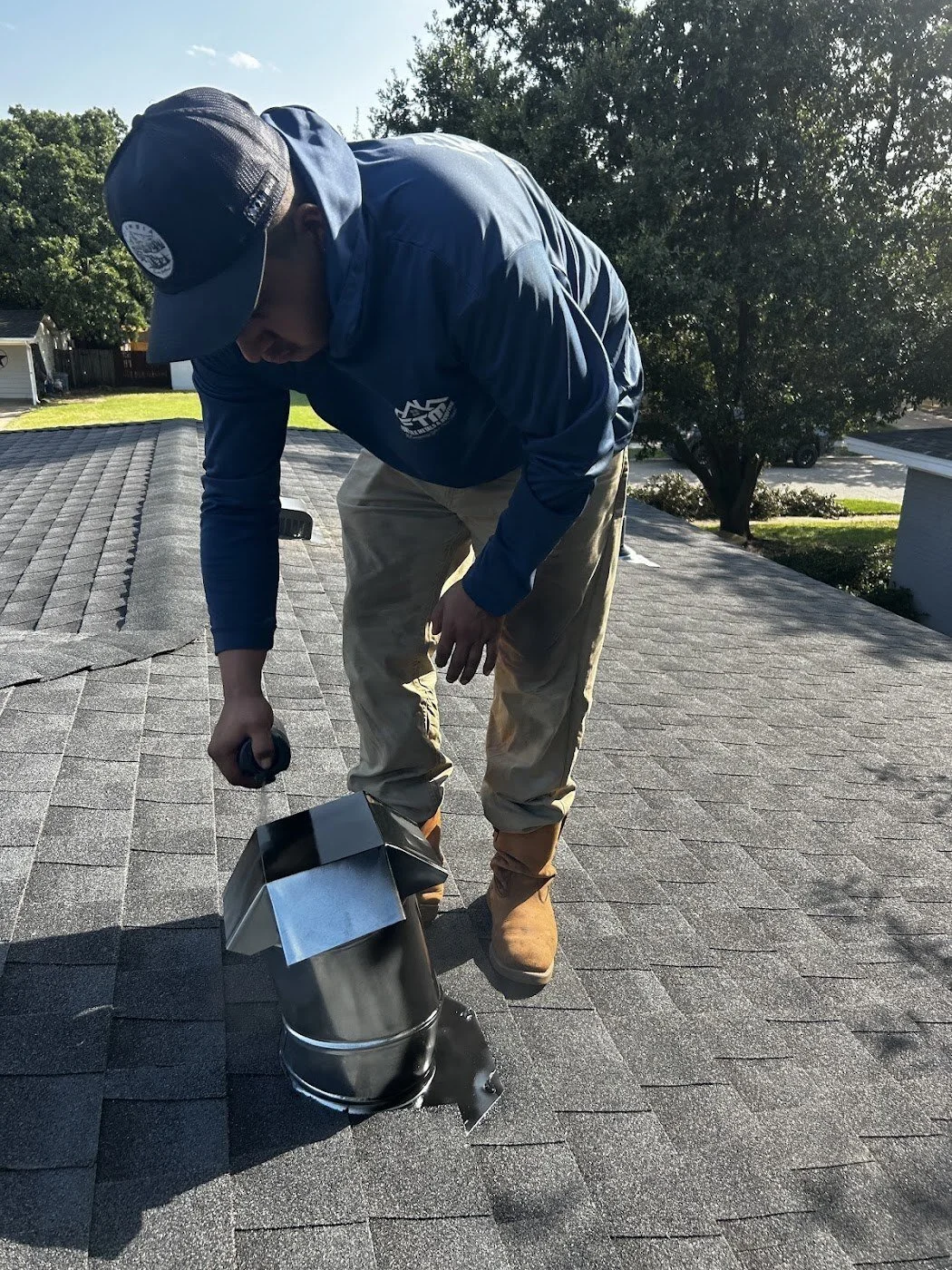
Ground walk. The inspector looks at the roof lines, gutters, downspouts and siding from the yard.
Roof surface. On the roof, the inspector checks each slope, with extra time on the sides that face incoming storms.
Details. Flashing, vents, pipe boots, valleys and ridge caps get a close look, since these are common leak points.
Attic. From inside, stains on the decking or damp insulation can show a leak the roof surface hides.
Findings. You get an explanation of what was found, with photos, and a recommendation for repair, replacement or no work at all.
At Fort Tex, we inspect residential and commercial roofs, including inspections after storm damage. We document what we find with photos so you can see the problem for yourself.
When to Get a Roof Inspection in North Texas
These are the times we recommend booking one:
After a hailstorm or high winds. The Texas Department of Insurance (TDI) tells homeowners to check the roof for missing or damaged shingles after a storm.
Every few years. TDI suggests hiring a roof inspector every few years to find issues early, even without a storm.
When you shop for a new home policy. TDI says insurers inspect your roof when you apply, and they may charge more or refuse coverage based on what they see.
When you buy or sell a home. A roof report gives buyers and sellers the same facts to work from.
When you see a stain or a drip inside. A leak rarely gets smaller on its own.
Ahead of a solar install. It's easier to repair a roof while there are no panels on top of it.
Spring and fall are good times for a regular check. A spring inspection catches damage ahead of storm season, and a fall inspection finds anything the summer storms may have left behind.
Inspections and Storm Damage Claims
An inspection can show you whether storm damage is worth a claim, and photos of the damage help you document it. You file the claim yourself. State law doesn't allow a roofer to act as a public insurance adjuster on a claim if they're also doing the work, so be careful with any roofer who offers to negotiate your claim.
TDI also notes that your policy won't pay for a new roof just because the roof is old or worn out. To lower the odds of a denied claim, read our post on how to prevent insurance claim denials covers what to do before and after you file.
Roof Inspection FAQ
How often should my roof be inspected? TDI suggests hiring a roof inspector every few years, and you should also check after any hail or windstorm. If your roof is older, ask your roofer how often to check it.
Can I inspect my own roof? You can check a lot from the ground and the attic. Leave the roof surface to a roofer, since wet or damaged roofing is slippery and easy to break.
Will a roofer file my claim for me? No. You file the claim. In Texas, a roofer can't act as a public adjuster on a claim for a job they're doing.
What happens after the inspection? You'll get the findings and a recommendation. That can be a repair, a replacement, or no work at all if the roof is in good shape.
Sources: TDI: Your roof · TDI: Know the law · City of Fort Worth roofing FAQ
Book your roof inspection ahead of the next storm season. Schedule online or call 682-313-4066 to protect your home.