

Signs of Hail Damage on Your Roof: A Fort Worth Checklist
A hail damage roof rarely looks that dramatic from the driveway. Many Fort Worth homeowners only find out they have sustained damage when a ceiling stain shows up weeks after a storm. Use this checklist to determine what you can check safely from the ground, what a roofer looks for up top, and when to book an inspection.
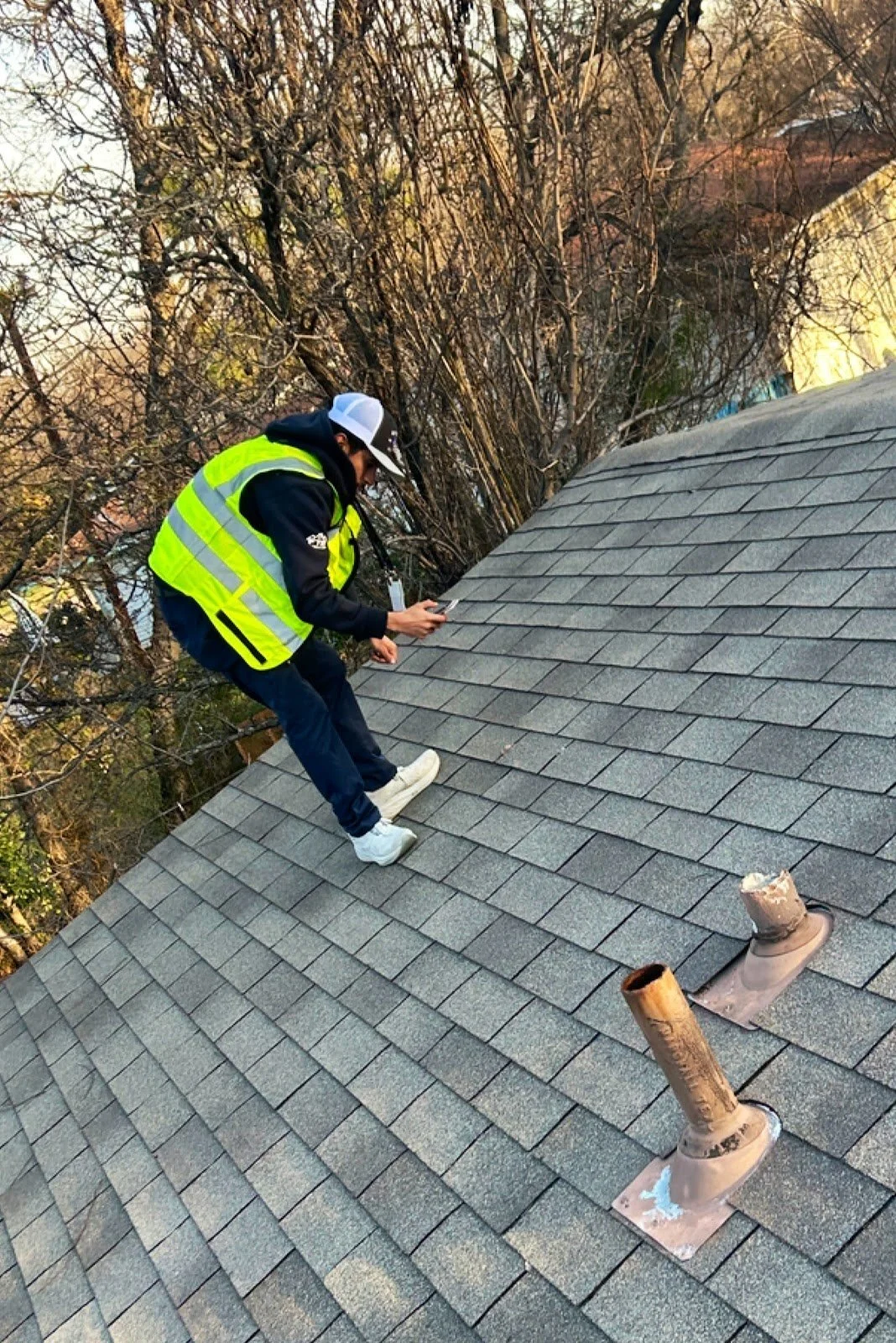
Why Hail Damage Is Easy to Miss in North Texas
Hail doesn’t need to punch a hole in your roof to cause trouble. A hailstone can crush the granules on a shingle, bruise the mat underneath, or crack the seal between shingle rows, and none of that is easy to see just looking up from the yard. Research from the Insurance Institute for Business & Home Safety (IBHS) found that dents, ridges and tears in shingles are the types of hail damage most closely tied to water getting in later.
North Texas storms can also drop very large hail. The National Weather Service Fort Worth office recorded a 5.25-inch hailstone during the April 11, 2016 storm, a record for its forecast area. That storm affected about 80% of homes in Wylie and caused more than $300 million in damage.
The size of the hail matters. The National Weather Service issues a severe thunderstorm warning when hail reaches 1 inch across, about the size of a quarter. If a storm near your home carried a warning like that, it’s worth checking your roof!
Start on the Ground: What to Check Before Anyone Climbs
You can learn a lot without using a ladder to check the roof. Walk around the outside of your house the day after the storm, while any debris is still where it landed.
Gutters and downspouts. Look for dents along the top edge and piles of dark, sand-like grit at the downspout outlets. A heavy load of it after one storm indicates that you’ve sustained shingle damage.
Soft metals. Check window screens, the AC condenser fins, mailbox, metal vents and any painted metal trim for fresh dings. If soft metal at ground level is dented, the roof likely will have dents as well, since it took the same hits during the storm.
Siding and window frames. Look for chips, cracks or spatter marks where hail cleaned off dirt.
Your yard. Shredded leaves, broken branches and shingle pieces on the lawn tell you the storm was strong.
Your ceilings and attic. Look for new water stains, damp insulation or daylight through the roof boards.
Take photos of everything you find with the date on them. The Texas Department of Insurance tells homeowners to take pictures and video of damage, make a list of it, and file a claim as soon as they can.
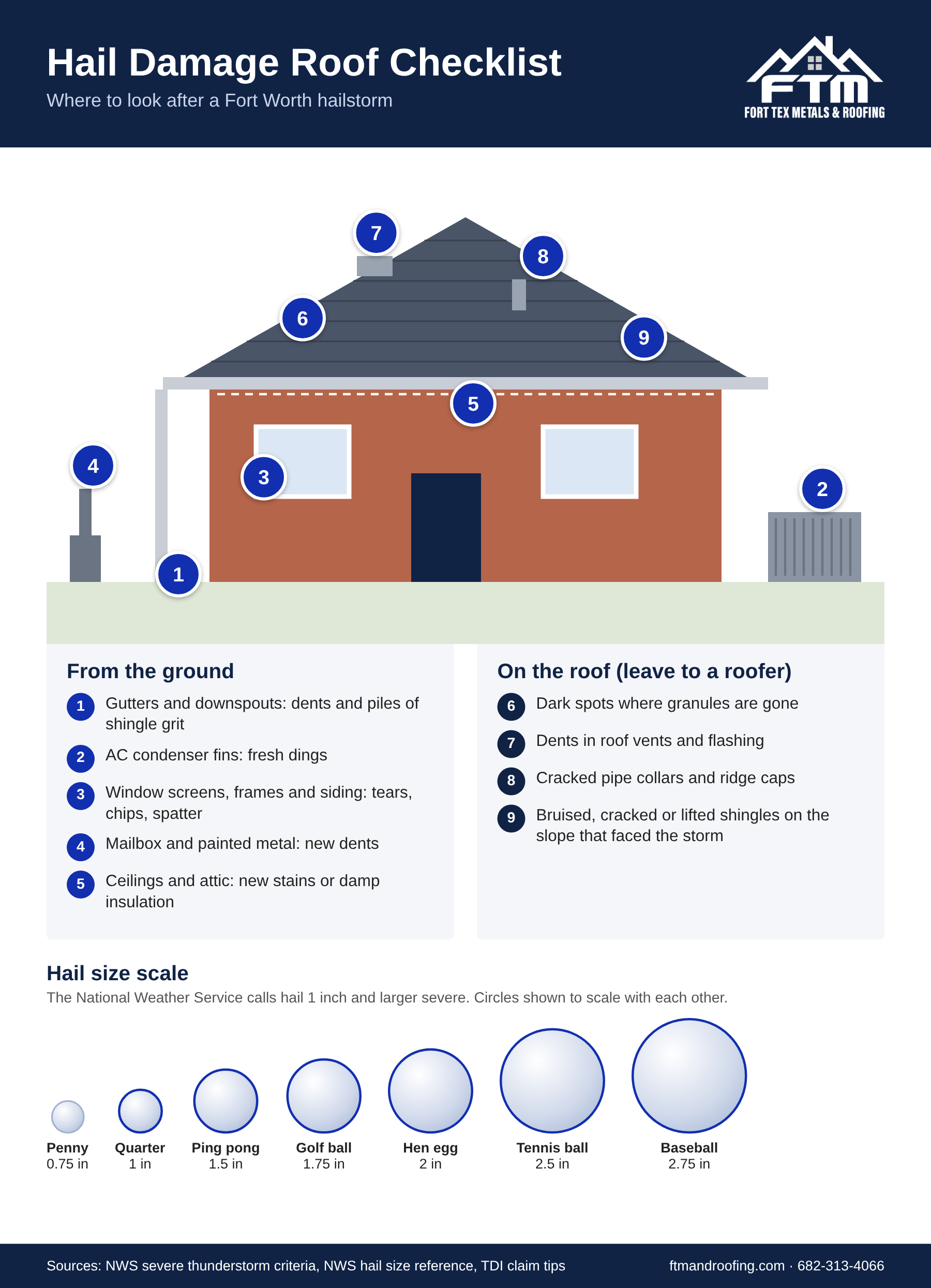
Signs of Hail Damage on the Roof Itself
These are the signs that a roofer looks for. Please don’t climb up yourself, wet or damaged shingles are slippery, and a roofer knows how to walk a roof without adding more damage.
| What you see | Where to look | What it can mean |
|---|---|---|
| Dark spots where granules are missing | Shingle faces, often in a random pattern | Hail knocked the protective granules off, and the asphalt will now age faster in the sun |
| Soft spots that feel like a bruise | Shingles on the side that faced the storm | The mat under the granules is fractured even if the surface looks fine |
| Cracked or split shingles | Edges and the middle of shingle tabs | Water can reach the underlayment and decking |
| Dents in metal flashing, vents and ridge caps | Roof vents, pipe collars, drip edge | Confirms hail hit the roof and shows the size of the stones |
| Dents or chipped paint on metal panels | Across the panel face and seams | May be cosmetic, or may affect coatings and fasteners |
| Loose or lifted shingles | Near ridges, edges and valleys | Often wind damage from the same storm, which can let rain in |
Hail damage follows the storm direction, so the roof slopes that faced into the storm usually show the most damage. A random pattern of marks is typical of hail. Wear from age usually shows up evenly across the whole roof.
Asphalt Shingles vs Metal Roofs After a Hailstorm
Asphalt shingles are the most common roof on DFW homes, and they show hail as missing granules, bruises and cracks. Over time, the exposed spots on shingles break down faster under Texas sun and heat, which is why damage that looks small in May can grow into a leak by fall.
Metal roofs react differently. Hail can dent panels or chip the finish, but it doesn’t knock off granules the way it does on shingles. Some dents are only cosmetic, while others can stress seams or fasteners. A roofer who works on both shingle and metal roofs can tell you which is which. You can read more about the roof repair services Fort Tex offers for shingle, metal and tile roofs.
Wood shakes, clay and concrete tile can all crack or split under hail. Tile is also easy to break by walking on it, which is another reason to leave the roof to a pro.
What to Do Next If You Find Signs of Hail Damage
Document it. Photos, video and a written list, dated. Keep receipts for anything you spend.
Prevent more damage. If water is coming in, cover the area or have a roofer put on a temporary tarp. TDI notes your policy may pay for temporary repairs, so save those receipts too.
Call your insurance company. File the claim yourself and be there for the adjuster visit to make sure they see everything.
Get a roof inspection. A roofer can confirm what is hail damage, what’s wear, and what needs repair.
Watch for storm chasers. Texas law requires you to pay your own deductible, and it’s illegal for a contractor to offer to waive it. Get more than one estimate and don’t sign a contract with blank spaces.
When to Call a Fort Worth Roofer for an Inspection
Call for an inspection if any of these are true:
Hail near your home was quarter-sized or bigger
You found dented gutters, vents or AC fins
Your downspouts dumped a lot of shingle grit
You see a new stain inside, even a small one
Your roof is older, and you haven’t had it checked in a few years
Fort Tex Metals & Roofing is a family-owned roofer based in Fort Worth that inspects residential and commercial roofs across the DFW area, including storm damage inspections. You can schedule a roof inspection online or call 682-313-4066. You’ll get a clear answer on whether the damage needs a repair, a full replacement, or nothing at all.
Hail Damage Roof FAQ
How soon after a hailstorm should I check my roof? Check from the ground within a day or two while debris is still in place. The Texas Department of Insurance recommends filing any insurance claim as soon as you can.
Can a roof have hail damage without leaking? Yes. Bruised shingles often don’t leak right away. The damage speeds up aging, and leaks can show up months later.
What size hail damages a roof? It depends on the roof’s age and material, but the National Weather Service treats 1-inch hail, about quarter-sized, as severe. Older shingles can be damaged by smaller hail.
Is it safe to get on my roof to look for hail damage? It’s safer to check from the ground and let a roofer handle the roof. Wet and broken shingles are slippery, and walking on damaged shingles or tile can cause more damage.
Can a roofer waive my insurance deductible? No. Texas law requires the policyholder to pay the deductible, and it’s illegal for a contractor to offer to waive, rebate or absorb it.
Does hail damage metal roofs? Hail can dent metal panels or chip the finish. Some dents are cosmetic and some affect seams or fasteners, so have a roofer who works on metal roofs take a look.
Sources: IBHS hail impact performance summary · NWS Fort Worth, April 11, 2016 hail storm · NWS severe thunderstorm definition · TDI: Hail damage to your home or car · TDI: Roofing and insurance, know the law
After the next storm, walk your yard, check your gutters, and take photos before you do anything else. If what you find points to a hail damage roof, schedule an inspection with Fort Tex to protect your home and catch a small problem before it turns into a leak.