

Seamless Gutter Installation vs Traditional Gutters in Fort Worth
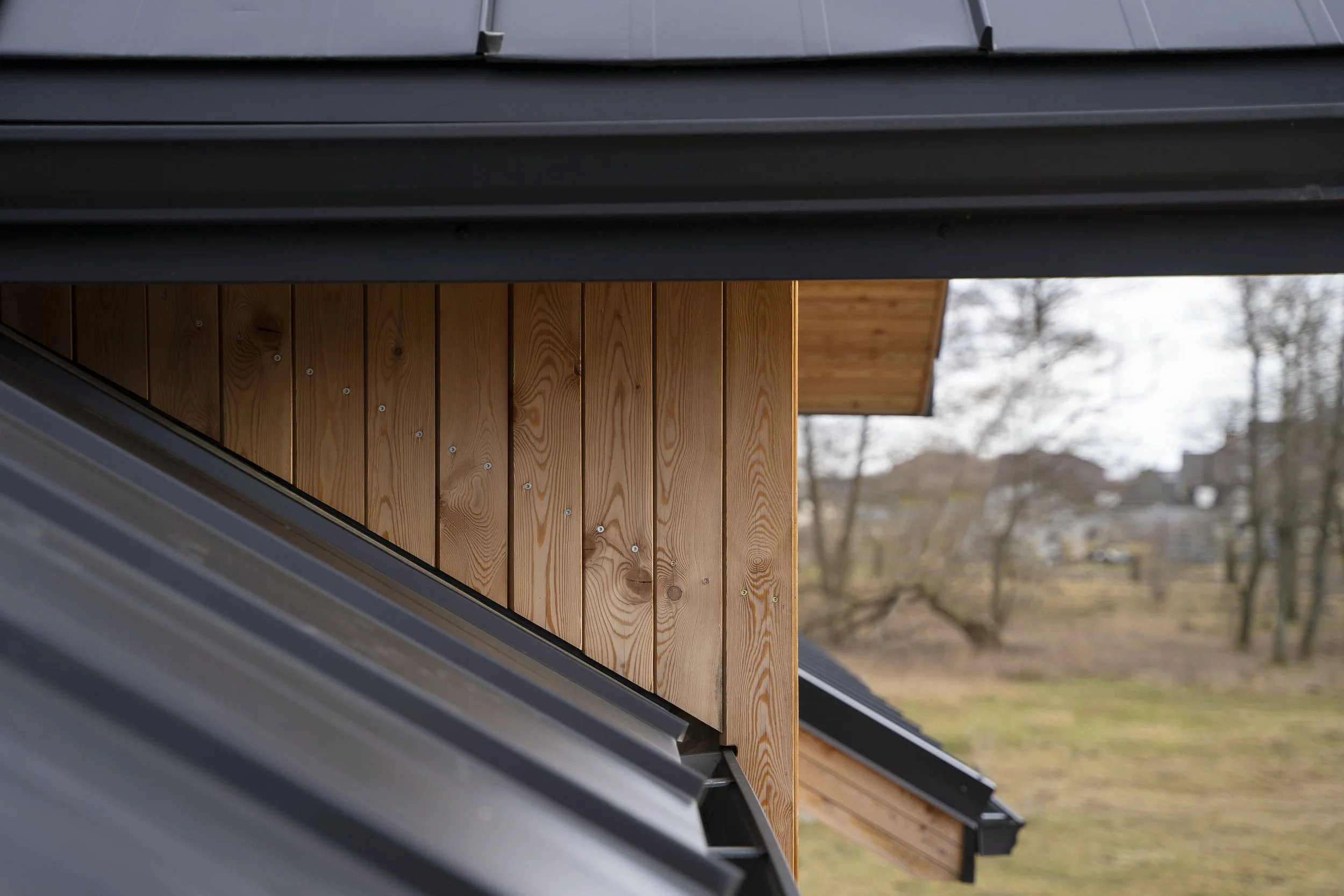
When most Fort Worth homeowners think about gutters, they aren't thinking about the difference between seamless and sectional. They're thinking about a gutter that's sagging, leaking at a joint, or pulling away from the fascia during a rainstorm. As trusted roofing specialists in Fort Worth will confirm, that issue almost always traces back to one thing: the seams.
Below, we break down why seamless gutters hold up better than sectional ones in the local climate, what a typical install actually looks like, and how to tell whether a repair or a full replacement is the smarter call for your home.
What Are Traditional Sectional Gutters?
Sectional gutters, sometimes called traditional gutters, are assembled from pre-cut pieces typically sold in 10 or 12-foot sections and connected end-to-end along the roofline. The sections are joined with connectors and sealed with caulk or gutter sealant.
Those connection points are where the system is most vulnerable. Over time, caulk dries and cracks, sealant breaks down under UV exposure, and the joint between sections separates. Water gets behind the joint, runs down the fascia board, and either drips alongside the foundation or sits in the gutter channel and breeds debris buildup.
Sectional gutters are common on older homes and frequently come standard on new construction at lower price points. They are not a failed product, but their maintenance demands are significantly higher than seamless systems, particularly in a climate like DFW's where temperature swings and UV exposure accelerate material breakdown.
What Are Seamless Gutters?
Seamless gutters are fabricated on-site from a continuous coil of material, typically aluminum, cut to the exact length of each run on your home. A specialized machine forms the gutter profile at the job site, meaning there are no factory joints and no mid-run seam connections.
The only joints in a seamless gutter system are at the corners and at the downspout connections. Both are designed connection points, not improvised seals. That dramatically reduces the number of potential leak points compared to a sectional system.
Fort Tex Metals and Roofing installs seamless gutters in Fort Worth and across the DFW metro as a standalone service or as part of a roof replacement project.
How Seamless Gutters Outperform Sectional Gutters in Fort Worth
Fewer leak points: A standard sectional gutter system on a typical Fort Worth home may have a dozen or more mid-run seams. Each one is a potential failure point. A seamless system has none.
Less debris accumulation: Seam joints in sectional gutters catch leaves, granules, and debris that would otherwise flow through to the downspout. That accumulation leads to clogs, overflow, and weight that puts additional stress on the attachment hardware.
Longer lifespan: Aluminum seamless gutters typically last 20 to 30 years. Sectional gutters, particularly those with older or degraded sealant at the joints, often begin failing well before that range.
Better performance during heavy rain: DFW storm events can produce significant rainfall in short periods. A gutter system without mid-run leak points moves water to the downspout faster and with less risk of overflow or redirection onto the fascia.
Cleaner appearance: Seamless gutters have a consistent, uninterrupted profile along the roofline without visible seam connectors breaking up the surface.
The Seamless Gutter Installation Process
Installation of a seamless gutter system differs from sectional in one important way: the gutters are made at the job site, not at a factory.
The installer arrives with a portable roll-forming machine loaded with a coil of aluminum stock. The machine is set to the gutter profile, the required length is fed through, and the finished gutter comes out as a single piece matched to that exact run of your roofline.
The process covers:
Removal of the existing gutter system and inspection of the fascia board for rot or damage
Fabrication of each gutter run to exact length
Setting proper pitch along each run, typically 1/4 inch of drop per 10 feet toward the downspout, to ensure water drains rather than pools
Attachment with hidden hangers set at appropriate intervals for the expected load
Installation of downspouts and extensions to direct water away from the foundation
Inspection of the complete system before the crew leaves
When to Replace vs. Repair Your Existing Gutters
Repair is worth pursuing when the existing gutters are in sound structural condition but have a specific, isolated failure point: one separated joint, one section pulling away from the fascia, or a single damaged downspout. If the rest of the system is performing correctly, targeted repair extends its life without the full cost of replacement.
Replacement is the better choice when:
The gutters are sectional with multiple failing seams
The material has been significantly dented by hail or corroded over time
The system is undersized for the roof's drainage area and routinely overflows during storms
The fascia boards behind the gutters show rot from chronic leak points
After a major storm, gutter replacement is frequently part of the same insurance claim as the roof. Fort Tex Metals and Roofing documents gutter damage alongside roofing damage in a single inspection, which supports a complete multi-line claim.
Sizing, Materials, and Downspout Placement
The two most common residential gutter sizes in Fort Worth are 5-inch and 6-inch profiles.
5-inch aluminum gutters are standard for most single-story and two-story homes with typical roof pitches and drainage areas.
6-inch aluminum gutters handle higher-volume drainage from steeper or larger roofs. Homes in areas that regularly see high-intensity rainfall events may benefit from the added capacity even at standard roof pitches.
Downspout placement matters as much as gutter size. A general guideline is one downspout per 30 to 40 linear feet of gutter, with extensions that direct water at least 4 to 6 feet from the foundation. Downspouts positioned directly against the foundation without extensions redirect rather than resolve the drainage problem.
Fort Tex Metals and Roofing: Seamless Gutter Installation in Fort Worth
Fort Tex Metals and Roofing installs seamless gutters across Fort Worth and the DFW metro as a standalone service or alongside a roof replacement. Their team handles the full exterior scope under one contractor: roofing, gutters, GAF Solar roofing, exterior painting, and fence repair.
After a storm, one inspection covers all affected systems. One estimate covers the full scope. One point of contact manages the process from inspection to installation.
Fort Tex is a GAF Master Elite Contractor (top 3% of US roofers), an Owens Corning Preferred Contractor (Pantera Pros), and a GAF Solar Certified Installer. They have operated in the Fort Worth area since 2019 with 100+ five-star Google reviews and over half of their business coming from referrals.
Related Topics: