

Roof Leak Repair: Why Roofs Leak and What to Do First
A few quick steps right after you find a drip can limit water damage inside your home while you wait for roof leak repair. Once we’re on site, we will track down where the water is getting in, which is often several feet from the stain on your ceiling.
What to Do First When Your Roof Leaks
Catch the water. Put a bucket or towels under the drip and move furniture, rugs and electronics out of the way. Keep clear of any wet light fixture or wiring.
Check the attic if it’s safe. Use a flashlight and look for wet wood, damp insulation, or a drip line. Mark the spot so we can find it later.
Take photos and video. Capture the stain, the attic and anything damaged. If you pay for a tarp or a temporary patch, be sure to keep the receipt.
Stay off the roof. Wet shingles and metal are slippery. Call a roofer for a tarp or a temporary patch instead.
Schedule an inspection. A small stain can come from a bigger problem somewhere else on the roof.
If the leak followed a storm, read what Texas homeowners insurance usually covers on a roof before you file.
Why Roofs Leak in Fort Worth
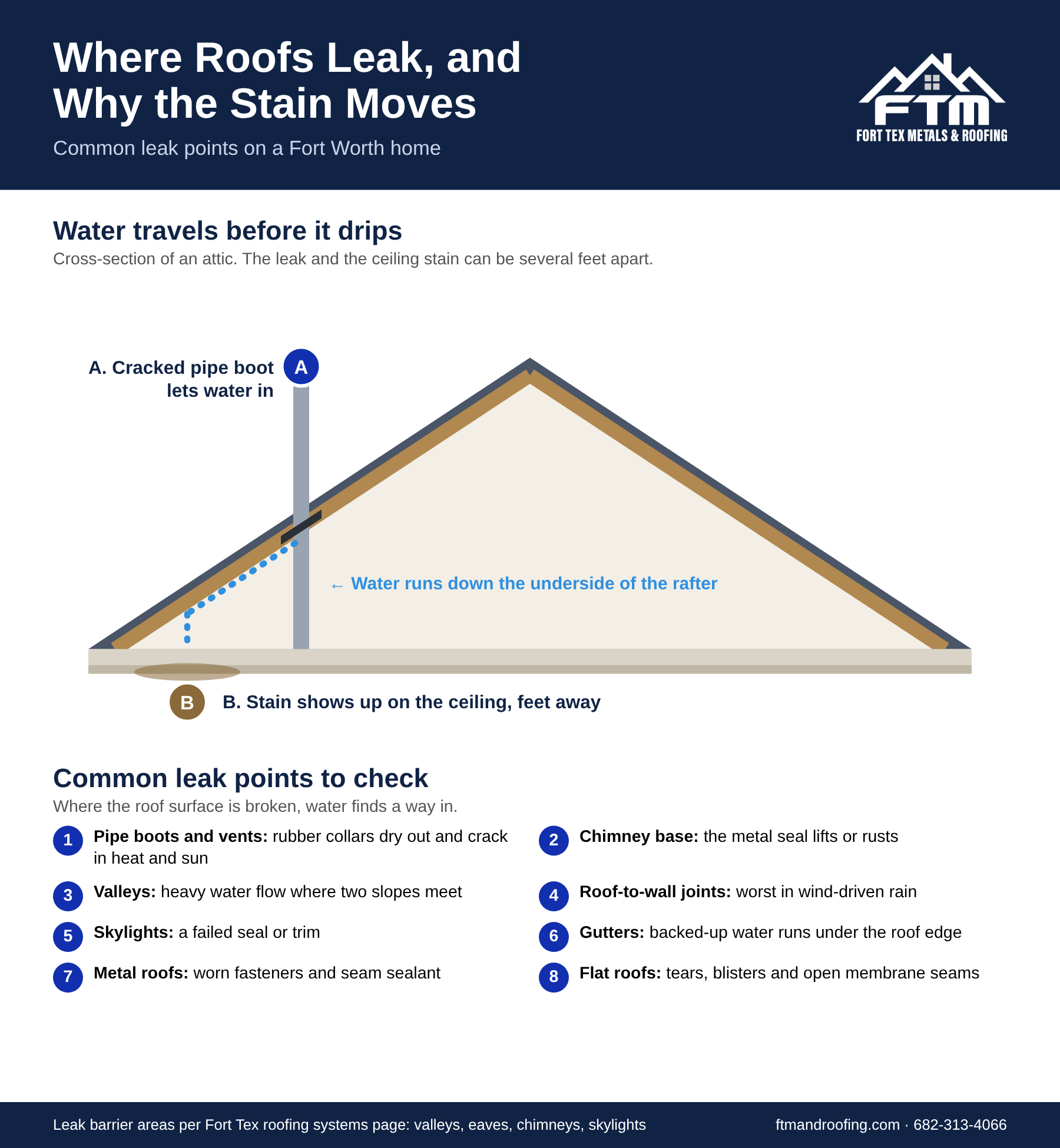
Roof leaks tend to start where something breaks up the roof surface: a pipe, a vent, a chimney, a skylight or even just a change in roof direction.
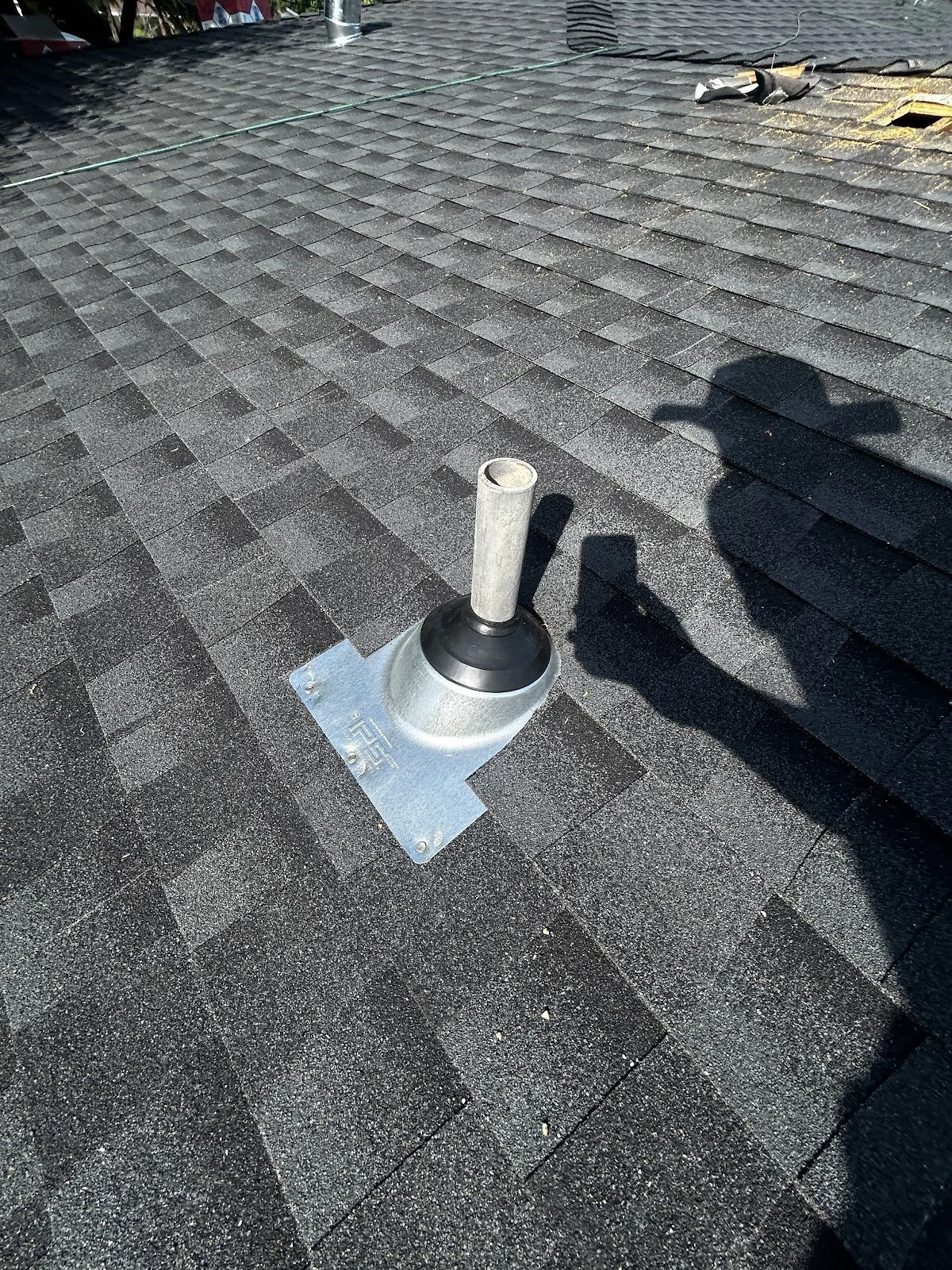
Pipe boots and vents. The rubber collar around a plumbing vent can dry out and crack in the North Texas heat and sun, letting water run down the pipe into the attic.
Flashing. Metal flashing at chimneys, walls and skylights can lift, rust or lose its seal.
Valleys. Where two roof slopes meet, water flows fast and heavy. Worn or poorly lapped valleys leak during hard rain.
Storm damage. Hail, high winds and falling limbs can crack, lift or tear off shingles and open a path for water.
Clogged gutters. When gutters back up, water can run under the roof edge.
Metal roof leaks. On metal roofs, leaks often trace back to loose or worn fasteners, failed sealant at the seams, or damaged trim around pipes and vents.
Flat and low-slope roofs. On many commercial buildings, water pools on the membrane and then finds any tear, blister or open seam.
These are the same spots our roof system protects with a leak barrier. It goes under valleys, eaves, chimneys and skylights because those areas take the most water.
Where the Stain Is vs Where the Leak Is
Water rarely drips straight down from the leak. It can run along roof decking, rafters or a pipe before it shows up on your ceiling, so the stain and the leak can be several feet apart. Use this table to narrow it down before we arrive.
| Where you see water | Likely source to check | Note for your roofer |
|---|---|---|
| Ceiling around a bathroom or kitchen vent | Pipe boot or vent collar | Ask them to check the rubber collar |
| Near a fireplace or chimney | The metal seal at the chimney base, or the chimney cap | Masonry can also absorb water |
| Along an exterior wall | Metal trim where the roof meets the wall, or gutters backing up | Check if it only leaks in wind-driven rain |
| Middle of a ceiling, not near anything | Damaged shingles, a valley, or nail pops higher up | Water may be running along a rafter |
| Around a skylight | The skylight seal or its metal trim | Note if it drips only in heavy rain |
| Commercial ceiling tiles under a flat roof | Membrane tear, seam or drain | Mark the tile location on a floor plan |
How a Roofer Finds and Fixes a Leak
Roof leak detection usually begins in the attic, where we will follow the water trail uphill toward its source. On the roof, we then check the pipe boots, vents, valleys and metal flashing above that spot, along with nearby shingles or panels for hail or wind damage. Some leaks only show up in certain rain, so we may run a hose test on one section at a time.
The repair suggested depends on what we find. It can be as small as a new pipe boot or a resealed vent, or as large as replacing a damaged section of decking.
Roof Leak Repair in Fort Worth and DFW
We handle minor and major roof repair in Fort Worth, Dallas and nearby cities, including asphalt shingle, metal and clay tile roofs, commercial flat roofs, and storm damage. We also offer interior restoration, so we can fix a leak-damaged ceiling in the same project. If your home has solar, we can detach and reset the panels to reach the roof underneath.
Roof Leak Repair FAQ
Can I patch a roof leak myself? You can catch the water and protect your belongings. The roof itself is safer left to a roofer, since wet roofs are slippery and a surface patch can hide the real source.
How long can I wait to fix a roof leak? Not long. Water can soak insulation, drywall and roof decking and lead to mold, so schedule an inspection as soon as you find a leak.
Why does my roof only leak in heavy rain? That usually points to a spot that only takes water in high volume or wind-driven rain, such as a valley, the trim where a roof meets a wall, or a skylight.
What if my ceiling is sagging from the water? Keep people and pets out from under it, since wet drywall can give way. Put a bucket under the lowest point, and if a light fixture sits in the wet area, turn off power to that room at the breaker. Then call us.
Do metal roofs leak? They can, usually at fasteners, seams or the seals around pipes and vents. Those parts need checks over time.
Found a drip or a new stain? Contain the water, take photos, and schedule a roof inspection or call 682-313-4066 to protect your home and stop the leak before the damage spreads.