

Metal roof cost depends on the panel system, the metal, the panel thickness and the size of your roof. Labor and prep work, like tearing off the old roof and fixing soft decking, can also add to the cost. Two homes on the same street can get very different quotes for a metal roof, and this guide shows you why. We don't list price ranges here, because we measure every roof before we price it. You'll see how metal roofers build a price, which choices move it up or down, and what to ask so you can compare quotes on equal terms.
How Metal Roofers Price a Roof
Most roofers price by the square. A roofing square is 100 square feet of roof surface. Some quotes show a price per square, and others show a price per square foot installed. Either way, the number should cover both materials and labor, so check that your quote says so.
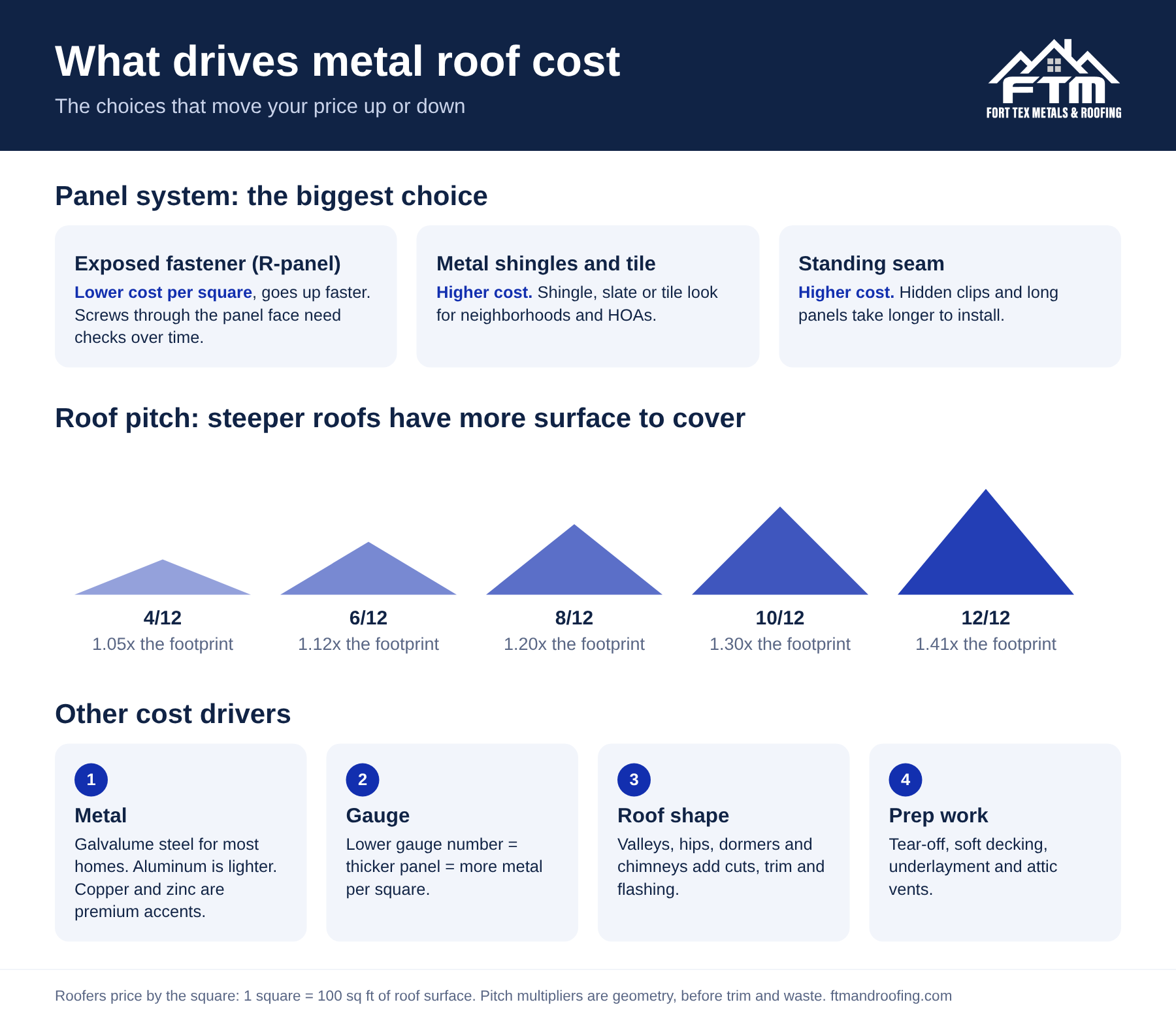
The key word is roof surface. Your roof has more area than your home's floor plan, because a sloped roof covers more surface than the flat footprint under it, and the overhangs add more. The steeper the roof, the bigger that difference gets.
Here's how pitch changes the roof area for a home with a 2,000 square foot footprint, overhangs included. Pitch is the inches of rise for every 12 inches of run:
| Roof pitch | Area multiplier | Roof surface | Squares |
|---|---|---|---|
| 4/12 | 1.054 | About 2,108 sq ft | About 21 |
| 6/12 | 1.118 | About 2,236 sq ft | About 22 |
| 8/12 | 1.202 | About 2,404 sq ft | About 24 |
| 10/12 | 1.302 | About 2,603 sq ft | About 26 |
| 12/12 | 1.414 | About 2,828 sq ft | About 28 |
Size is only part of it. The shape of the roof matters as much:
Shape: every valley, hip, dormer, chimney and skylight needs custom cuts, trim and flashing, so a simple gable roof takes far less of that work than a roof with many angles.
Pitch: a steep roof is slower to work on and needs more safety gear for the crew, which adds labor.
Access: tight lots, trees and fences can slow material delivery and cleanup.
The table numbers cover the flat panels only. The quote also covers trim, flashing and waste from cutting panels to fit, so the material order runs a bit larger than the measured surface, which is why we measure the roof itself before we write an estimate.
For a quick starting number on a new roof, try the instant estimate tool on our new roof cost page. For an exact price, here's how our estimate process works:
Call or book online. Tell us about your home and what you want from a new roof.
Free inspection. We measure the roof, check the decking and the attic ventilation, and take photos you can keep.
Written estimate. We walk you through panel types, materials and colors so you can compare options side by side.
Panel System: The Biggest Cost Choice
We install three main types of metal roof systems across Fort Worth and the wider DFW area. The system you pick has the largest effect on your price.
| System | Relative cost | Install time | Common fit |
|---|---|---|---|
| Exposed fastener (R-panel) | Lowest | Goes up faster | Shops, barns, outbuildings, some commercial buildings |
| Metal shingles and metal tile | Higher | More pieces to set | Homes in neighborhoods or HOAs that want a shingle, slate or tile look |
| Standing seam | Higher | Takes longer | Homes in modern, farmhouse and traditional styles |
Exposed fastener panels. R-panel and similar profiles cost less per square and go up faster. The screws go through the face of the panel, so the fasteners need checking over time. We usually recommend these panels where budget and speed matter more than a hands-off roof.
Metal shingles and metal tile. These pressed metal panels look like architectural shingles, slate or clay tile. They fit an established neighborhood or an HOA that wants a traditional roofline.
Standing seam. Long panels run from the ridge to the eave in one piece, and clips hide the fasteners under raised seams. The panels take longer to fit and install, which adds labor. Read our guide to this system for how the system works and where it fits.
Shops and commercial buildings. We also install and repair metal roofs on shops, warehouses, offices, and churches. Exposed fastener panels work well on shops and outbuildings, where the lower cost per square stretches a budget across a large roof. Standing seam suits buildings where you want fewer places for water to get in. On a large, simple roof, the panel system and the metal drive most of the price, since there are fewer angles to trim.
Type of Metal, Gauge and Finish
We work in steel, aluminum, copper and zinc, and each one changes the metal roof cost in a different way.
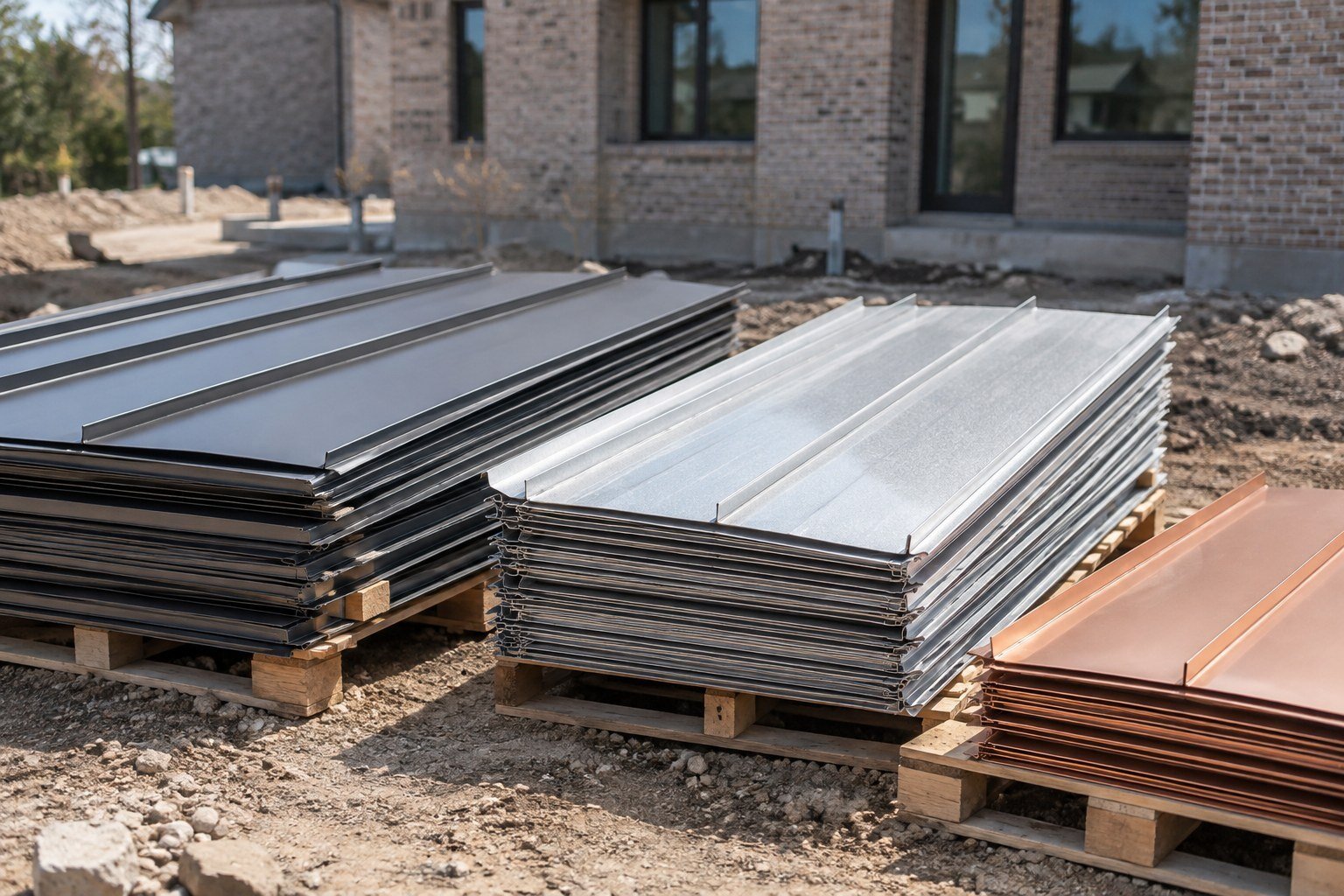
Galvalume steel is steel coated with an aluminum and zinc alloy. It's the main choice for most Fort Worth homes, and steel roofing is the usual starting point when you compare prices.
Aluminum roofing weighs less and resists corrosion. It's a material option to talk through with your roofer, since it handles hail differently than steel.
Copper and zinc are premium choices. They're common on accent roofs, porches and architectural details instead of the whole house.
If you like the look of copper but not the price of a full copper roof, a copper porch or bay window roof paired with steel on the main roof is one way to get the look for less.
Gauge: Metal panels come in different gauges, and a lower gauge number means a thicker panel. Thicker panels use more metal, so they cost more per square, but in our experience heavier gauge standing seam holds up better than thinner panels.
Paint finish: A USDA Forest Service overview of roof materials says factory-applied coatings extend the life of painted standing seam steel roofs, so the finish affects how long the roof lasts as well as how it looks. Ask which paint system comes on the panels you're quoted, and whether the color you want is a standard or a special order.
Tear-Off, Decking and Other Prep Work
Prep work is a real part of any metal roof cost. On a typical replacement, we remove the old roof, replace any soft decking, then install the underlayment, panels, trim and flashing, and clean up when the job is done.
Decking is the line most likely to change after work starts, because no one can see every board until the old roof comes off. Ask how your quote handles it. A good quote lists a set price per sheet of decking, so you know the cost of any extra boards before the crew finds them. Ask whether that price includes hauling the old boards away, and whether the crew will show you the damaged decking before they replace it.
Underlayment is the layer between the deck and the metal. Ask which underlayment comes with the quote and how it's installed under the panels.
Attic ventilation is another line that can show up on a metal roof quote. A metal roof needs good airflow underneath to work its best, so we check the attic ventilation before we install. If your attic needs more intake or exhaust, adding vents during the roof replacement is the easiest time to do it, since the deck is already open. Our attic ventilation page explains how much venting an attic needs.
Noise is a common worry with metal, and it ties back to prep work too. Metal can be louder in heavy rain, mostly with thin panels and little insulation. Solid decking and good attic insulation keep the sound down, so ask how your quote handles both.
Metal vs. Asphalt Shingles: Cost Now and Cost Over Time
Metal costs more to install than asphalt shingles. The difference that matters is how long each roof lasts. Metal roofs generally last 40 to 70 years, much longer than asphalt shingles. Our roof lifespan guide covers the expected life of each material in Texas.
To compare the two on equal terms, divide each installed price by the years you expect it to last. That gives you a cost per year for each roof. If one roof lasts twice as long as another, it can cost up to twice as much and still come out even on cost per year. After that, think about how long you plan to stay. If you plan to stay for decades, a metal roof can mean one roof instead of two. If you plan to sell in a few years, you may not get the extra upfront cost back.
Repairs are part of the long-term cost too. A damaged seamed panel can often be replaced on its own, so you don't have to redo a whole slope after a single dented or damaged panel.
For the full side-by-side of the two materials, read Metal Roofing vs Asphalt Shingles for North Texas Homes.
Insurance: Hail is part of the cost picture in North Texas. Some insurers give a premium discount for impact-resistant roof coverings, and each company sets its own amount. Our Class 4 guide explains how those ratings and discounts work in Texas. Ask your agent before you choose a panel, since the discount depends on the product's rating.
Financing: If the upfront cost is the hurdle, we work with lenders to offer financing for your new roof. You can apply online and review your options before you schedule the project.
Questions to Ask Metal Roofers About Your Quote
Before you sign, ask these questions so you can compare quotes on equal terms:
Which panel system and profile is in the price?
Which metal, gauge and paint finish come with the panels?
Is the price per square or per square foot, and does it include materials and labor?
How many squares did you measure, and does that include waste?
Does the quote include tear-off, disposal and cleanup?
What's the price per sheet if you find soft decking?
Which underlayment, trim and flashing are included?
What do the panel, finish and workmanship warranties cover, in writing?
How long will the crew be on site, and who is your contact during the job?
If one quote is much lower, these questions usually show why. A thinner panel, a different system or a missing line item can explain most gaps between two quotes. Our metal roofing page covers the systems we offer and how we walk you through the options before you commit.
Metal Roof Cost FAQ
Why does a metal roof cost more than shingles? The panels cost more than asphalt shingles, and metal takes more skilled labor to measure, cut and install. Seamed panels with hidden clips take the longest to install.
Is R-panel cheaper than standing seam? Yes. R-panel and similar exposed fastener profiles cost less per square and go up faster. The trade-off is screws through the panel face that need checking over time.
Does a thicker panel cost more? Yes. A thicker panel, which has a lower gauge number, uses more metal. In our experience, heavier gauge panels also hold up better than thinner ones.
Why don't you list metal roof prices online? Every roof has a different size, pitch, shape and deck condition, and each one changes the price. We measure your roof during a free inspection and give you a written estimate.
Is steel or aluminum better for a Fort Worth home? Galvalume steel is the main choice for most Fort Worth homes. Aluminum weighs less and resists corrosion, and it's worth talking through with your roofer if those points matter for your home.
Can I put metal on just part of my home? Yes. Copper and zinc work well on a porch, bay window or accent roof, with steel or shingles on the main roof. Less metal on the roof means a lower price for that part of the project.
Do you offer financing for a metal roof? Yes. You can apply for financing online through our financing page and review your options before you schedule the work.
Sources: USDA Forest Service, Overview of Roofing Materials · Texas Department of Insurance: Roofing discounts
Metal roof cost is easier to judge once you know what's in the price. Schedule a free inspection or call 682-313-4066, and we'll measure your roof, walk you through the options and help you protect your home with a written estimate.