

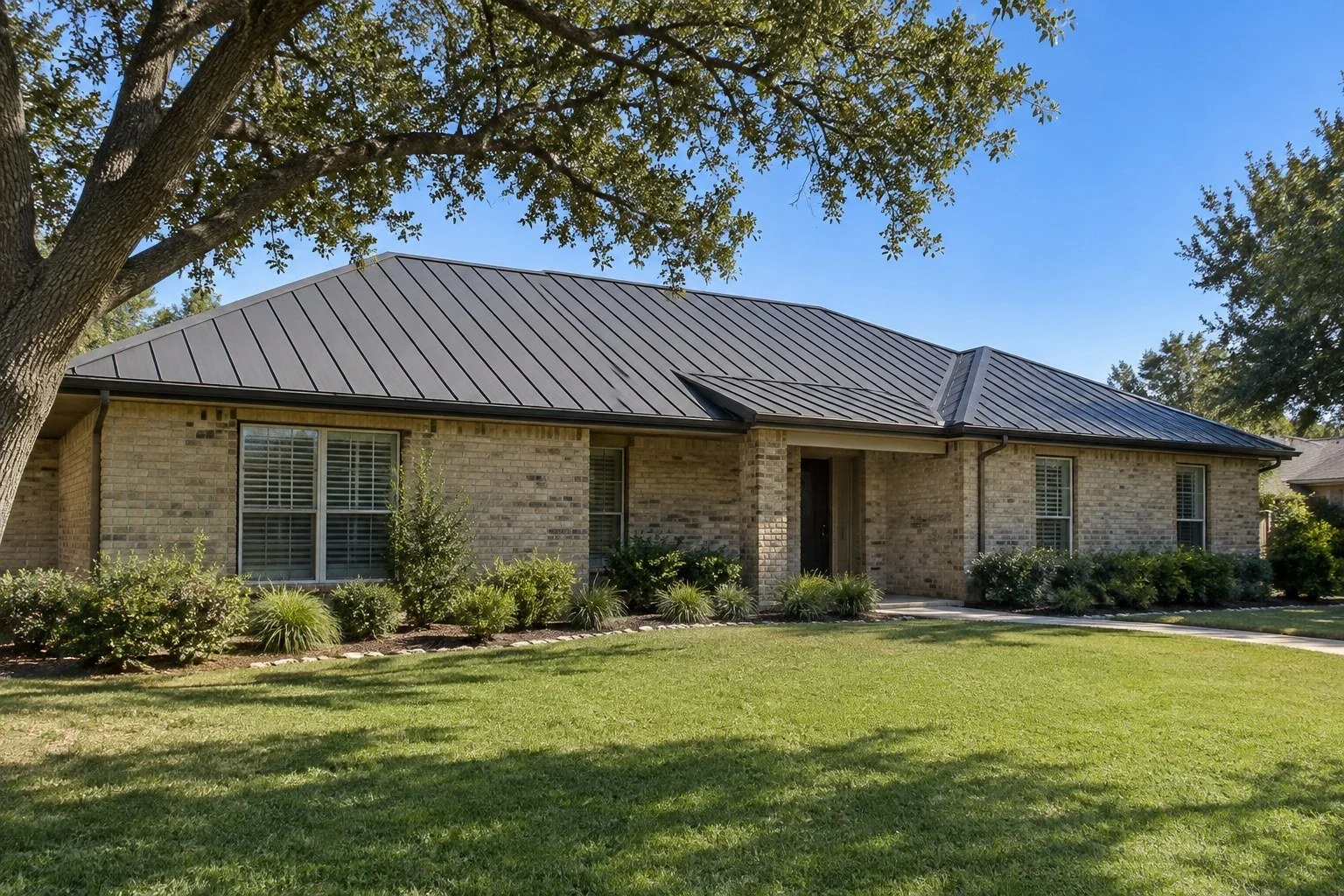
A standing seam metal roof uses long vertical panels that lock together at raised seams, with the fasteners hidden under the panels. At Fort Tex, we install standing seam, metal shingle, and metal tile roofs across Fort Worth and the wider DFW area. Below you'll see how the system works, where it fits, and what to ask before you choose it.
How a Standing Seam Roof Works
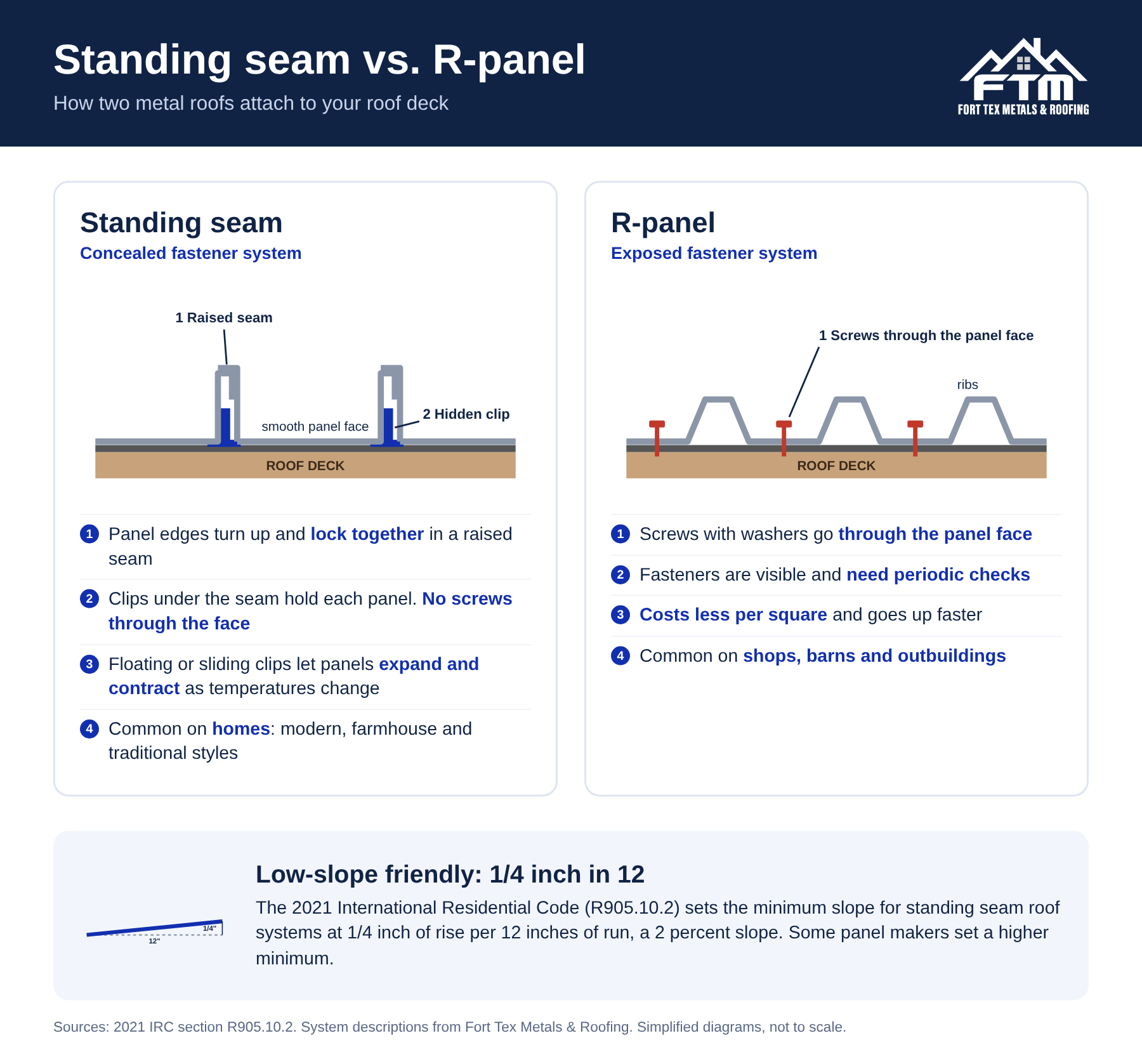
Standing seam panels run in one piece from the ridge to the end of the roof at the eave. The long edges of each panel turn up, and the edges of two panels lock together into a raised seam. Clips attach to the roof deck under that seam and hold each panel in place, so no screws go through the face of the panel. Once the panels are installed, there are no exposed screws on the surface to loosen or leak over time. This concealed fastener design is the main difference from other metal roofing panels.
The clips also allow the metal to move. Panel manufacturers design standing seam systems to expand and contract as temperatures change, and floating or sliding clips let each panel shift inside the clip. That movement is important in North Texas because a roof heats up in strong summer sun and cools off at night.
Standing Seam vs. Exposed Fastener Panels
The other common metal roofing system is the exposed fastener panel, often called R-panel. Both are metal, but they're built and used in different ways:
| Feature | Standing seam | Exposed fastener (R-panel) |
|---|---|---|
| Fasteners | Hidden under the raised seams | Screws go through the panel face |
| Upkeep | No exposed screws to loosen | Fasteners need periodic checks |
| Cost | Higher | Less per square (100 square feet) |
| Labor time | Takes longer | Goes up faster |
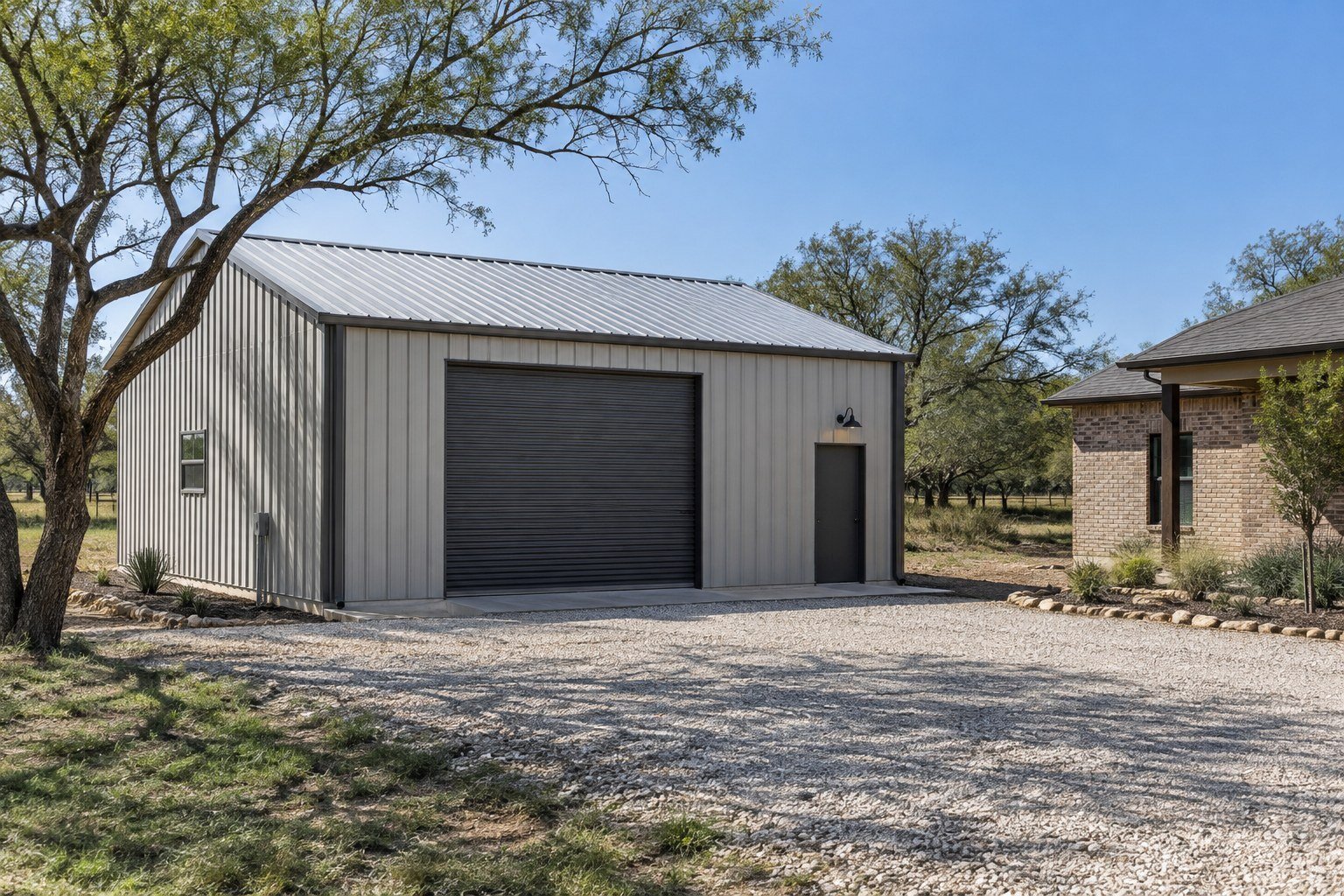
| Common use | Homes in modern, farmhouse and traditional styles | Shops, barns, outbuildings and some commercial buildings |
We usually recommend R-panel when the budget and speed of completion matter more than having a hands-off roof. For a home you plan to stay in, standing seam is the system most homeowners choose when they want a roof they can stop thinking about.
Where a Standing Seam Metal Roof Fits
Roof pitch. The 2021 International Residential Code (IRC), section R905.10.2, sets the minimum slope for standing seam roof systems at 1/4 inch of rise per 12 inches of run, a 2 percent slope. That means standing seam roofing can work on low-slope porches and additions where shingles won't. However, a panel maker's own minimum can be higher, so your roofer should check the panel maker's instructions too.
Home style. Standing seam works on modern, farmhouse and traditional homes. If your HOA wants a traditional roofline, metal shingles or metal tile offer a metal roof with a shingle, slate or clay tile look.
Metal choice. We work in steel, aluminum, copper and zinc:
Galvalume steel (steel coated with an aluminum and zinc alloy) is the main choice for Fort Worth homes.
Aluminum weighs less and resists corrosion.
Copper and zinc are high-end picks for accent roofs, porches and architectural details.
Pros and Cons of Standing Seam
Pros
No exposed fasteners on the roof surface.
Large hail can dent the panels, but a dented panel is cosmetic in most cases.
Metal reflects summer heat instead of holding it.
Standing seam metal roofing has clean vertical lines that suit many home styles.
Cons
It costs more up front than shingles or R-panel.
Dents from hail can show, even when the roof still works as it should.
The roof needs enough pitch for the panel you pick.
Workmanship matters, so hire a crew that works with metal often.
For a full look at metal next to shingles, read Metal Roofing vs Asphalt Shingles for North Texas Homes and Benefits of Installing a Metal Roof in the Texas Climate.
Questions to Ask Standing Seam Metal Roofers
Before you sign, get clear answers to these questions:
Which panel profile and which metal will you use?
What gauge and paint finish come with the panel?
Do the clips let the panels expand and contract?
Does my roof pitch meet the panel maker's minimum slope?
What do the panel, finish and workmanship warranties cover, in writing?
Our metal roofing page covers the systems we offer and how we walk you through roofing options before you commit.
Standing Seam Metal Roof FAQ
What is the minimum slope for a standing seam metal roof? The 2021 IRC sets the minimum at 1/4 inch of rise per 12 inches of run, a 2 percent slope. Some panel makers set a higher minimum, so check the panel maker's instructions.
Does hail ruin a standing seam roof? Large hail can dent metal panels, but a dented panel is cosmetic in most cases. The roof system keeps doing its job.
How long does a full roof replacement take? Most residential roof replacements are completed in one to two days, depending on the size and complexity of your roof. Larger or more detailed projects can take a bit longer. Several customer reviews mention crews completing a full replacement in a single day, even in Texas heat.
How do you communicate updates during a roofing project? We keep you informed at every step, from sending photos of storm damage to texting updates on installation day, even when you can't be on site. If weather affects a scheduled install, we let you know ahead of time. We also explain the process before work begins so you know what to expect and why.
What roofing materials and brands do you install? We install shingle roofing systems and metal roofing, including standing seam, metal shingles and metal tile. Brands we use include GAF Timberline HDZ, Owens Corning, Mule-Hide and Worthouse. We use complete roofing systems rather than mixing components, and we'll help you compare materials based on your budget, the style of your home, and how long you want the roof to last.
Sources: 2021 International Residential Code, Chapter 9
If you're thinking about a standing seam metal roof for your Fort Worth home, we'll walk you through the panel, metal and pitch options before you commit. Schedule a visit online or call 682-313-4066 to protect your home with a roof built for North Texas weather.